

Rest assured, investing in the stock market doesn’t have to be complicated – its all about understanding the right terms and strategies.
There are a few key terms you will come across on your investing journey.
Here are 10 terms that will get you started:
- Stock – A stock represents ownership in a company. When you buy shares of a company’s stock, you become a partial owner of that company. If you say you have stocks you could own several shares of different companies. If anyone berates you on not being able to explain the difference between stocks and shares they are being an ass. Its not a big deal, so ignore them.
- Dividends – Portion of a company’s profit that it distributes to its shareholders. Often on a regular basis.
- Portfolio – A collection of investments. Your portfolio could be solely stock or it could also include, for example other investment items such as bonds or mutual funds.
- Bull Market –
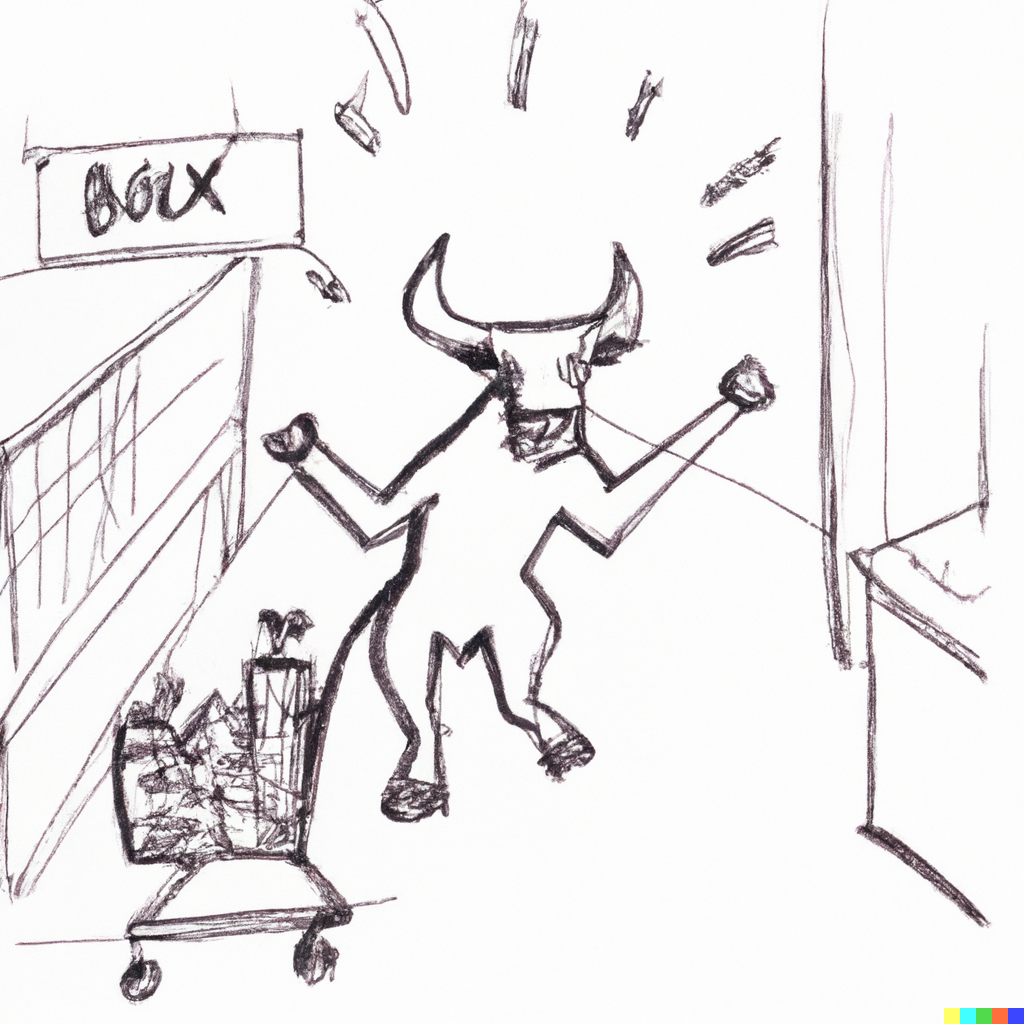
A Bull market or bull run is a period of rising stock prices and optimism. General confidence in the market is high.
5. Bear Market – A period of declining stock prices and pessimism. Opposite of a bull market.
6. Market Cap – Market capitalisation is a measurement of a company’s size. The total value of a company based on its stock price. If you add up the price of each one of its shares this sum is its market cap. This allows you to get an understanding of how big a company is. Eg. Small cap company is worth between $300 million and $2 billion. A small cap ETF ( one example is iShares core S&P Small – Cap ETF) will be composed of small capitalisation US stock.

7. Blue chip – These are stocks that are considered well established and historically stable. Blue chip companies are typically leaders in their industry. They are considered to be relatively safe investments. E.g. Coca Cola, Apple, Proctor & Gamble. If you look at their share price chart over the long term ( over the years) it trends upwards.
8. Volatility – A volatile stock’s price will fluctuate frequently in a short space of time. Low volatility indicates more stable price movements.

9. Long – If a person is ‘long’ on a share, they mean they have bought shares and they anticipate the price to rise in the future.
The opposite is ‘short’. If a person is going short or shorting a company they mean that they anticipate the price of a share to fall in the future. They are selling stock at todays price and will buy it back cheaper when the price falls – but – the stock that they are selling they don’t actually own. Think of it as placing a bet that the price will fall. If it does fall they make money. If it rises they lose.

10. Diversification - Spreading investments in a variety of stocks, bonds, and other securities, rather than putting all funds into a single investment. The aim is to reduce the impact of any one investment’s poor performance. Diversification does not guarantee against losses, but it is a fundamental principle for prudent investment management.
What terminology would you like to see explained in simple terms?
 Sailor & Watters
Leave a comment